Posts

Nursery Checklist: Essential Items for Your Nursery
Image
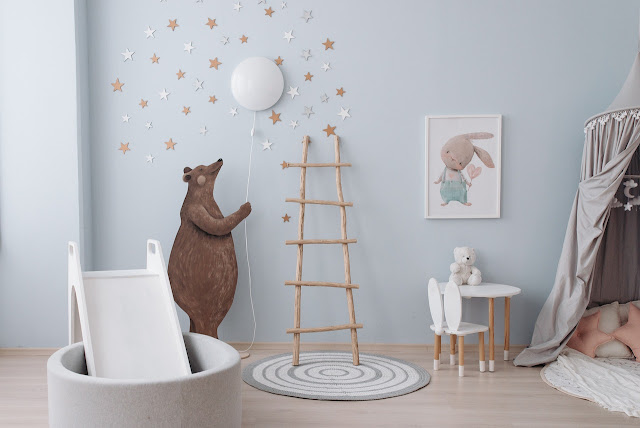
Essential Items For Baby Nursery Being a new mom is already a stressful experience, so setting up a nursery maybe even more stressful. Your list of "things to buy" may seem to be expanding at the same rate as your stomach. The first thing you should do is figure out what you actually need to make sure your new baby is secure, cosy, and happy; after you have a practical and furnished home, put in all the aesthetic aspects. Baby nursery necessities include: 1. Crib or Bassinet A Baby's bed is one of the most crucial items in the Nursery. Whether you select a fancy crib or a straightforward cot, your child's resting area will probably be the center of attention in the nursery. Whatever your budget and design preferences, be sure the crib or bassinet is solid and constructed from high-quality materials. 2. A changing table A strong changing table is a nursery must because your kid will use thousands of soiled diapers in his or her first year. Although you will get go...

How to Raise an Intelligent Child?

Image
Parenting Tips on How to Raise a Smart Child Parents frequently worry about whether their children are brilliant enough in this competitive age and question if there is anything they can do to support their child's intellectual growth. The appropriate kind of stimulation at a young age is thought to significantly improve a child's mental capacities. Thus, the early years are when it is most important to concentrate on a child's intellectual growth. Here are some helpful pointers that can assist you in raising a smart child. Effective Methods for Raising a Smart and Intelligent Child 1. Participate in baby talk A child's ability to communicate is a crucial skill for developing intelligence. It fosters a link between you and your child and helps them gain confidence and self-esteem. By engaging your child in linguistic activities, you can help him develop his communication abilities. Talk to your child about your activities, your day, or anything else you like. He will le...

7 Fun activities to do with kids in daycare

Image
  7 Fun Activities to do with Children in Daycare Here are some easy activities to try with kids in day-care at nurseries in Wimbledon : Play Earth and Moon first The Earth and Moon game was created when Melanie was 4 years old by Bill Herbert, a father of three and veteran third-grade teacher. Give your child a flashlight with a wide beam so they can play, and take a flashlight with a tight beam (a laser pointer will also work). Face up on a bed, in complete darkness. It is the responsibility of your youngster to move the Earth (the wide beam) in broad, slow circles around the ceiling. Your task is to maintain the moon's orbit around the Earth (the narrow beam). 2. Make "scrap boxes" for special places Gather items unique to that location, like shiny rocks or acorns, when on an excursion to a park or other beloved location. Take pictures of fleeting souvenirs, such as vibrant leaves. Once you get home, work with your kid to paint the box that will hold your co...

What does Preschool do for a Child?

Image
  What Does Preschool do for a Child? Preschool or nurseries in Wimbledon is a great educational opportunity for kids because there they are exposed to numbers, alphabet, and shapes. But more crucially, they gain social and emotional maturity and discover how to cooperate, share, and contribute with others. According to research, kids who go to a high-quality preschool start school with greater pre-reading abilities, larger vocabulary sets, and more firmly established foundational math skills than kids who don't. So why not insist that your child attend preschool when it will only benefit them and is a good idea? At that age, children ages 3-6 are like little sponges. Even more than you might believe, they can absorb a lot. As a parent, you should take advantage of this opportunity to teach your children the life skills they will need. If you are trained in early childhood education to do so, home schooling your kids at this age might offer them a solid academic start, but it w...

The Benefits of Outdoor Play For Children

Image
The Benefits of Outdoor Play for Children and their Development At different ages, children play in different ways. A 2-year-old cannot be expected to play in the same manner as an 8 or 6-year-old. Children of all ages can benefit from outdoor play, despite the fact that they will have varied interests based on their developmental stage. Both when children are small and as they get older, this is true. Children have restrictions on what they can do outside between the ages of birth and two, but it doesn't mean they shouldn't have the chance. Most children at that young age will play or explore alone as they develop their senses and become accustomed to their surroundings. Parents may see their toddler watching larger children play around the age of 2, although they will probably still prefer solo play at that age. Additionally, you can see your youngster move from observing other kids to picking a nearby game to play. Benefits of Outdoor Play for Social Development Playin...

How to teach your kids manners

Image
How to teach your Kids Manners Teaching manners to a young child may appear daunting, but it does not have to be. You can encourage your child to be polite by teaching them a few key phrases and greetings, teaching them the value of empathy and compassion, and modelling good behaviour so that they have someone to look up to! This article discusses these and other methods for teaching your child the value of good manners and etiquette. Teach your child to say "goodbye" and "hello." These phrases are the first steps in interacting politely with others. Make it a habit to greet yourself with "hello" or "good morning" when you wake up each day. As your child gets the hang of it, try to remind them to greet relatives and friends. If they don't say hello, gently remind them. Consider the following: "That's Tom, our next-door neighbour! Do you want to introduce yourself?" They can even learn to say "hello" even if they...

Why Teaching Kids to Say Please and Thank You Is Important

Image
Wimbledon Day Nursery The fundamentals of etiquette, such as saying please and thank you, must be consistently practised in order for youngsters to learn them as second nature. Teaching children to say please and thank you is crucial, in our opinion. It demonstrates respect for our teachers and fellow students. Demands are softened into pleas. It encourages kids to consider others' needs while focusing on their own. Here are some methods we employ with our youngest pupils. Model It: We utilise these terms in our requests and regular encounters, first and foremost. We utilise our please and thank you with the kids while we exchange toys, sing songs on the rug, toss a ball on the playground, or do yoga poses. They take inspiration from and adopt this behaviour. Babies can say please too: "Please" and "Thank You" are two of the sign language cues we utilise most frequently and consistently with our infants and young children. When young children are trying to ...